WEB DESIGN · PRICING · SEO · URUGUAY · Punta del Este · Maldonado
How much does a website cost in Uruguay in 2026? Prices, real costs and what should be included
A basic website can cost a few hundred dollars; a project built for acquisition, SEO, multiple languages or integrations can cost several thousand. The useful comparison is not price alone: it is scope, ownership, measurement and outcome.

Short answer: planning ranges for website pricing
Publicly advertised prices in Uruguay vary substantially. For example, Bioma currently publishes one-page and landing projects from USD 390 + VAT, institutional websites from USD 680 + VAT and online stores from USD 815 + VAT. Those are one provider’s prices, not an official market rate.
To compare different projects, we use planning bands rather than pretending there is one correct number. The final price depends on content, design, SEO, page count, languages, integrations, measurement and support.
Useful planning ranges are: landing page or basic presence USD 300–700; professional business website USD 700–1,500; acquisition, SEO and conversion-focused website USD 1,200–2,500; multilingual or higher-complexity website USD 1,500–3,500+; ecommerce USD 1,500–5,000+; website with integrations or software from roughly USD 2,500–3,000+.
Reference: Bioma · Website pricing in Uruguay (published prices)
Why can one website cost USD 400 and another USD 3,000?
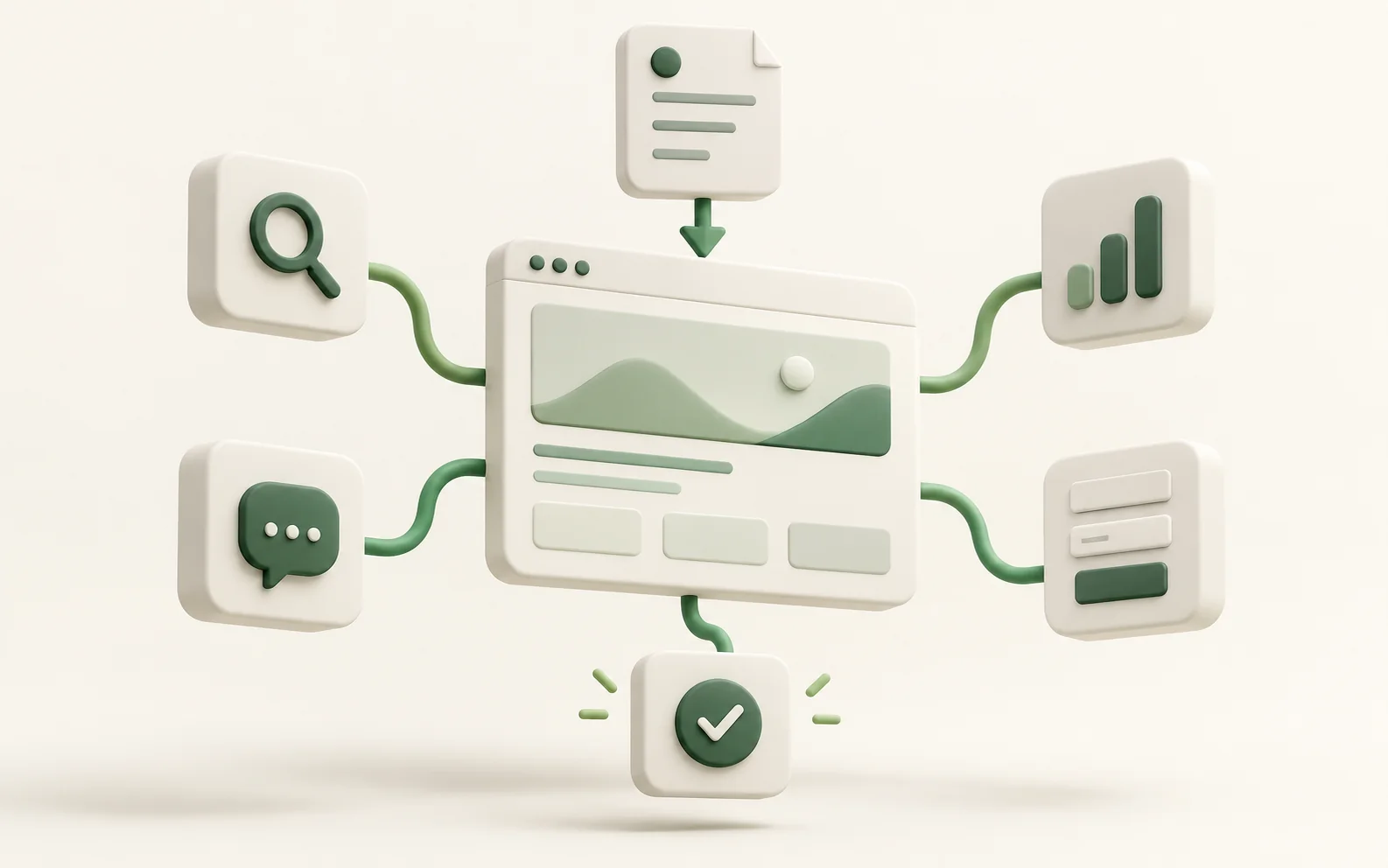
Because you are probably not buying the same thing. A website can be a simple digital presence — Home, Services, About and Contact — or it can be part of a commercial system: search, content, service page, WhatsApp, lead, follow-up and customer.
Two websites can look equally polished while having very different scope underneath the interface. The useful question is which work, assets and capabilities are included.
What actually changes the price of a website
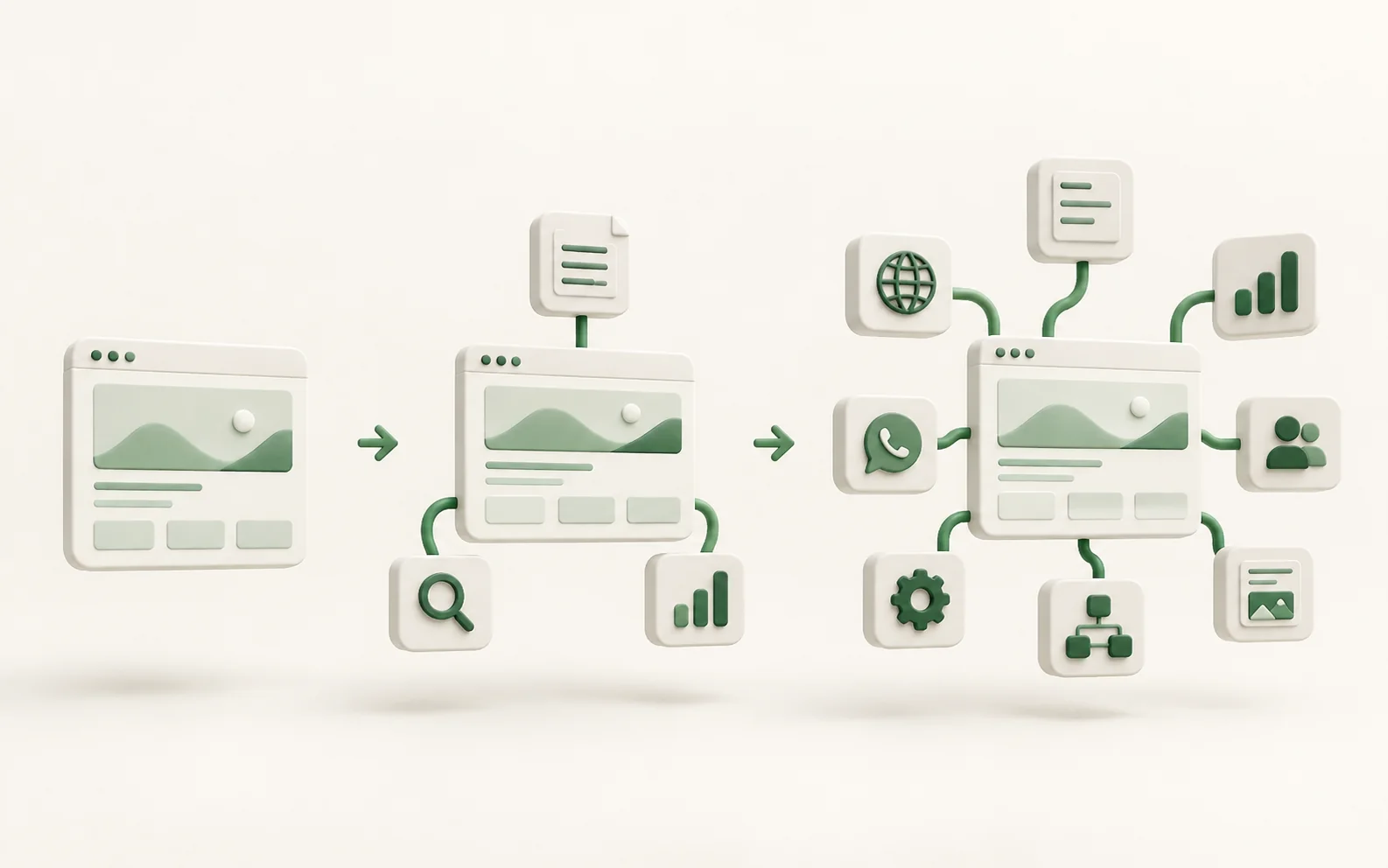
Website type is the first variable. A landing page may solve one service; a company with multiple services, markets or customer profiles needs more architecture and more entry points.
Content also changes the scope. Receiving final copy is different from researching the business, structuring services, understanding search demand and writing each page. Design, SEO, languages and measurement add work because they need to function as one coherent system.
Integrations are where a website begins to become software. A WhatsApp button is simple; tracking lead source, connecting a CRM, calendar, APIs, users or automation requires another level of design, testing and accountability.
- Type and number of pages.
- Research and content writing.
- Design and user experience.
- Technical SEO and search-oriented service pages.
- Languages, URLs, metadata and localized navigation.
- Analytics, conversions and external integrations.

What GEMOS charges today and what each level is for
At GEMOS, we separate projects by the problem they need to solve. A landing page used to validate an offer should not be priced like a multilingual platform expected to acquire demand and connect enquiries to operations.
The amounts below are starting prices. Final scope is defined before work begins.
- GEMOS Launch — from USD 690: landing page or compact site, structure and content, responsive design, form or WhatsApp, basic technical SEO, performance, Analytics, Search Console and deployment.
- GEMOS Growth — from USD 1,290: commercial architecture, multiple service pages, research, content, design and development, technical SEO, conversion measurement, WhatsApp, QA and repository.
- GEMOS Authority — from USD 1,990: deeper SEO architecture, multiple languages where relevant, specialised content, case studies, FAQs, analytics, tracking, integrations and an editorial structure that can grow.
- Ecommerce — from approximately USD 2,490, depending on platform, catalogue, payments and integrations.
- Website + software — from approximately USD 2,990. CRM, databases, users, automation and custom logic are scoped as software rather than “one more page”.
Expensive or cheap? Uruguay and international markets have different economics
Uruguay has both low-cost and premium offers. A local studio cannot be compared directly with an international agency without normalising scope, team, location, hours and responsibility.
As an international reference, Upwork publishes website projects ranging from a few hundred dollars to tens of thousands depending on complexity, while Clutch places agency web design projects at roughly USD 2,000–100,000, with many reviewed projects below USD 10,000.
For GEMOS, that creates a useful position: compete on value in Uruguay rather than trying to be the cheapest provider, while using an AI-assisted production structure to deliver more scope per dollar than higher-overhead teams.
Reference: Upwork · How Much Does It Cost To Build a Website in 2026? · Clutch · Web Design Company Pricing Guide 2026
What actually changes when we use artificial intelligence
AI can accelerate research, programming, initial structure, translation, documentation, testing and technical analysis. That reduces production time and lets a small team deliver more.
It does not remove the work that determines quality: understanding the business, deciding what to build, structuring information, reviewing, testing, correcting, publishing and measuring. It also does not remove API or infrastructure costs when the final product uses external services.
So we do not use AI efficiency as a reason to sell a professional website at template pricing. We use it to improve speed, margin and scope.
The customer is not buying keyboard time. They are buying an outcome, assets they can control and a solution they can continue using.
The initial price is not the total cost of ownership
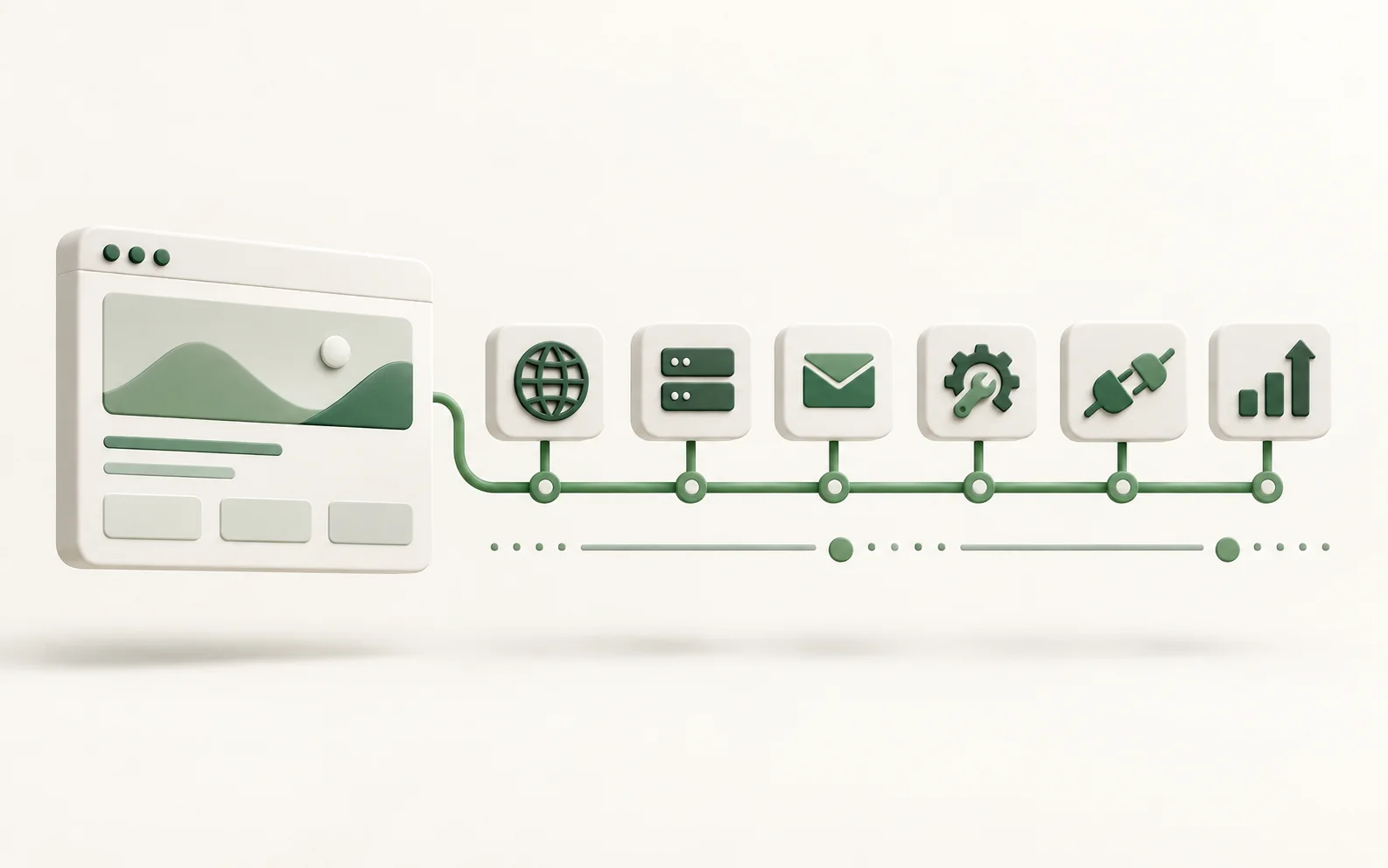
The development quote is only the beginning. Over the next 24 months there may be domain, hosting, email, licence, API, maintenance, content, SEO and improvement costs.
A professional proposal should separate one-off, monthly, annual, optional and usage-based costs. That transparency lets you compare total cost of ownership rather than only day-one price.
- Domain and renewals.
- Hosting or infrastructure.
- Business email.
- Licences and platforms.
- APIs and usage-based services.
- Maintenance, content, SEO and improvements.
How to compare two website quotes without stopping at the final number
A USD 700 quote and a USD 1,500 quote are not comparable if one includes only design and launch while the other includes content, SEO, measurement, ownership, QA and integrations.
Before choosing, ask the proposal to answer these questions explicitly.
- Will the domain be registered in your company’s name?
- Where will the site be hosted, and can you change provider?
- Will you have access to the code and repository?
- Who writes and approves the content?
- What exactly does “SEO included” mean?
- Are Analytics and Search Console configured?
- Are forms and WhatsApp clicks measured?
- How are credentials and permissions handled?
- Are backups required and included?
- What happens after launch?
- What do later changes cost?
- Can you migrate without rebuilding everything?
- Which future costs belong to you and which belong to the provider?

Your company should control the domain, accounts, code and data
A provider can manage digital assets without owning them. As a general rule, the domain, Analytics, Search Console, repository, databases and primary accounts should remain under the company’s control.
That reduces dependency and makes it possible to change providers without rebuilding the digital business from scratch. Portability is also a useful sign that the project is being treated as an asset rather than a lock-in mechanism.
Before rebuilding: keep, improve, redesign or rebuild
We do not assume that every business needs a new website. Sometimes the problem is content, SEO, performance, conversion, measurement or follow-up, and the existing foundation can be improved.
Rebuilding makes sense when the technology, architecture or maintenance burden seriously limits progress. Otherwise, change only the areas where there is a real constraint.
- Keep — the foundation works and there is no major problem that justifies intervention.
- Improve — the website works but has opportunities in content, SEO, conversion or measurement.
- Redesign — the structure works but the experience and presentation no longer represent the business well.
- Rebuild — the technical or architectural foundation blocks growth or makes maintenance unnecessarily expensive.
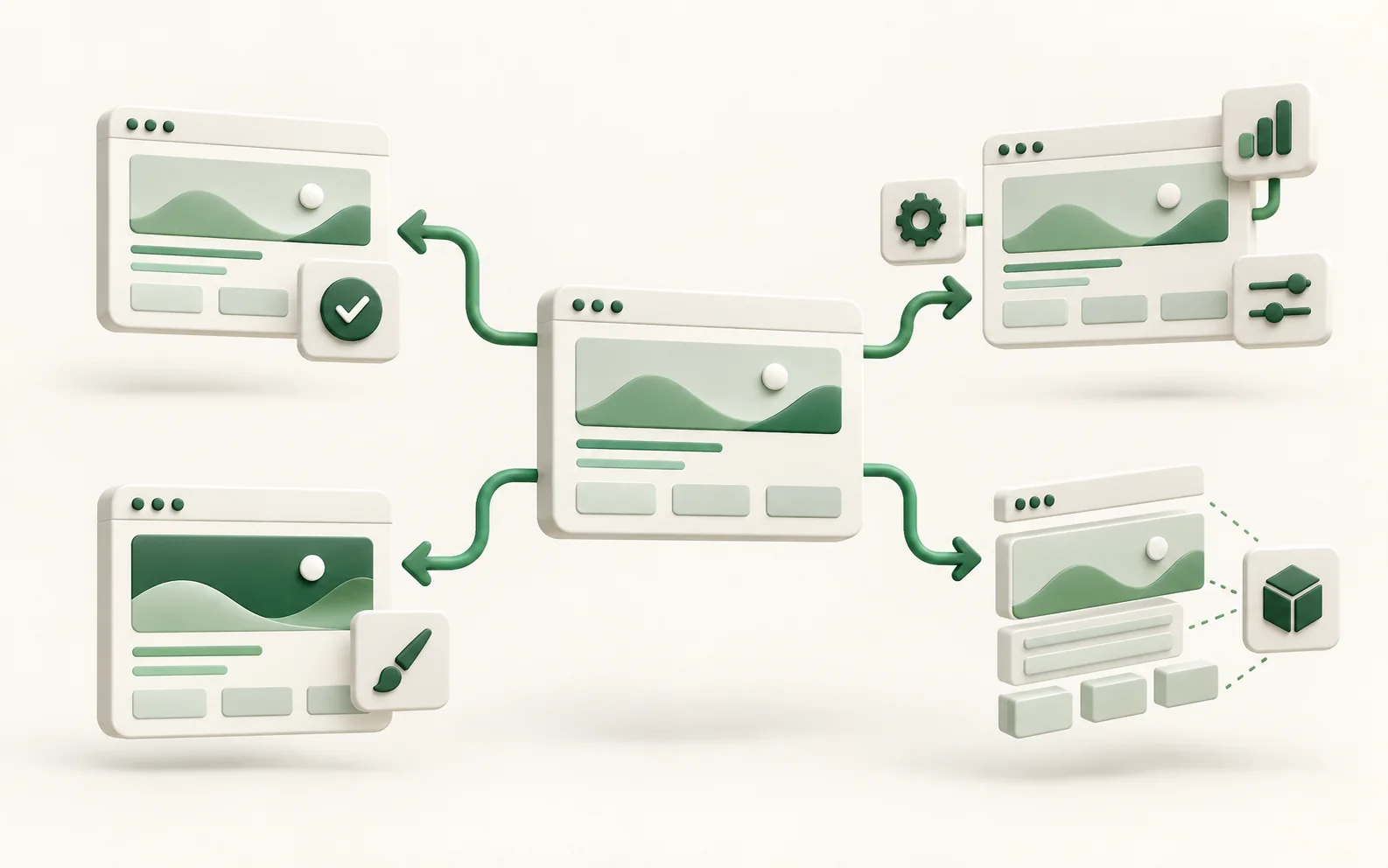
Cheap website vs. professional website: the objective defines the investment
A low-cost website can be exactly the right decision when validating a new service. If demand is still uncertain, a strong landing page may make far more sense than a USD 5,000 platform.
When a business depends on search, multiple services, international customers, multiple languages, trust, lead generation and measurement, the required scope grows.
A useful way to think about investment is to compare it with customer economics. If a new customer produces USD 2,000 in margin, a USD 1,500 website that contributes to acquiring several customers may be small relative to the value created. If the real problem is distribution, spending more on the website will not solve it.
How to know whether the website is working
Launch should not be the end of the project. Afterwards, you should be able to observe which searches create impressions, which pages receive visits, how many people make contact, how many enquiries are qualified and how many become opportunities or customers.
Search Console helps measure organic visibility by query, page and period. Analytics and events show behaviour; WhatsApp, forms and CRM complete the connection to commercial outcomes when the business has enough volume.
Measurement does not turn correlation into causation. It creates a baseline and supports better decisions about what to keep, improve or stop.
Reference: Google Search Console · Performance report
Google, ChatGPT and AI search: a strong website should work as a source
Digital discovery no longer happens only in a classic list of search results. People also research companies through AI assistants and AI-powered search experiences.
That does not require a second website “for ChatGPT”. It requires a clear source: crawlable pages, specific services, consistent information, useful content, evidence and an architecture people and systems can understand.
At GEMOS, we treat AI visibility as an extension of a strong digital presence, not as a promise of “position #1” in a system that does not offer a fixed ranking.
Warning signs before hiring a web provider
A professional project should explain what you are buying, what is excluded and what you can control. These signals are reasons to ask for clarification before signing.
- You do not know whose name the domain will be registered under.
- The provider controls every account and does not provide access.
- You cannot access the code or repository where appropriate.
- “SEO included” has no defined scope.
- Monthly costs appear only after you have hired the provider.
- The provider guarantees #1 positions in Google or ChatGPT.
- There is no measurement setup.
- There is no clear policy for changes, support or migration.
- Changing provider means starting again from zero.
So, how much does a website cost in Uruguay in 2026?
A basic digital presence can cost a few hundred dollars. A professional business website usually requires a larger investment, and projects involving SEO, content, multiple languages, ecommerce, integrations or software can reach several thousand.
Price alone is not enough to evaluate a proposal. Compare scope, ownership, content, SEO, measurement, integrations and future costs. Above all, define the result the business needs before deciding how much to build.
Define the problem and scope first. Compare price second.
Frequently asked questions
How much does a landing page cost in Uruguay?
As a planning reference, a professional landing page can fall around USD 300–700 depending on content, design and functionality. Public offers exist both below and above that range.
How much does a professional business website cost?
A business website can start around USD 700, while projects with content, SEO, measurement, multiple services or languages can easily move beyond USD 1,500–2,000.
How much does GEMOS charge?
Our current reference starts at USD 690 for Launch, USD 1,290 for Growth and USD 1,990 for Authority. Ecommerce and integrations are scoped separately.
Why do some websites cost USD 200 and others several thousand?
Because they can be different products: a template and basic presence versus research, architecture, content, SEO, measurement, integrations and support. Compare scope, not just price.
Should AI make my website cheaper?
AI can reduce time spent on research, development, translation, testing and documentation. That efficiency can improve speed and cost structure, but it does not remove strategy, review, QA or accountability for the result.
Do I need to pay monthly maintenance?
Not necessarily. It depends on the technology, agreed support and whether you want ongoing SEO, content, improvement or automation work.
Should the domain be registered in my company’s name?
Usually, yes. The domain and primary accounts are business assets and should remain under the company’s control.
Do I need to rebuild my website to improve SEO?
No. Architecture, content, performance, indexation and conversion can often be improved without rebuilding the entire site.
Sources and references
- Bioma · Website pricing in Uruguay (published prices)
- Upwork · How Much Does It Cost To Build a Website in 2026?
- Clutch · Web Design Company Pricing Guide 2026
- Google Search Console · Performance report
Operating examples are illustrative. References support search-related guidance; they do not certify GEMOS results.